
Mental Health
Understanding Three Phases of Addiction
28 Jan
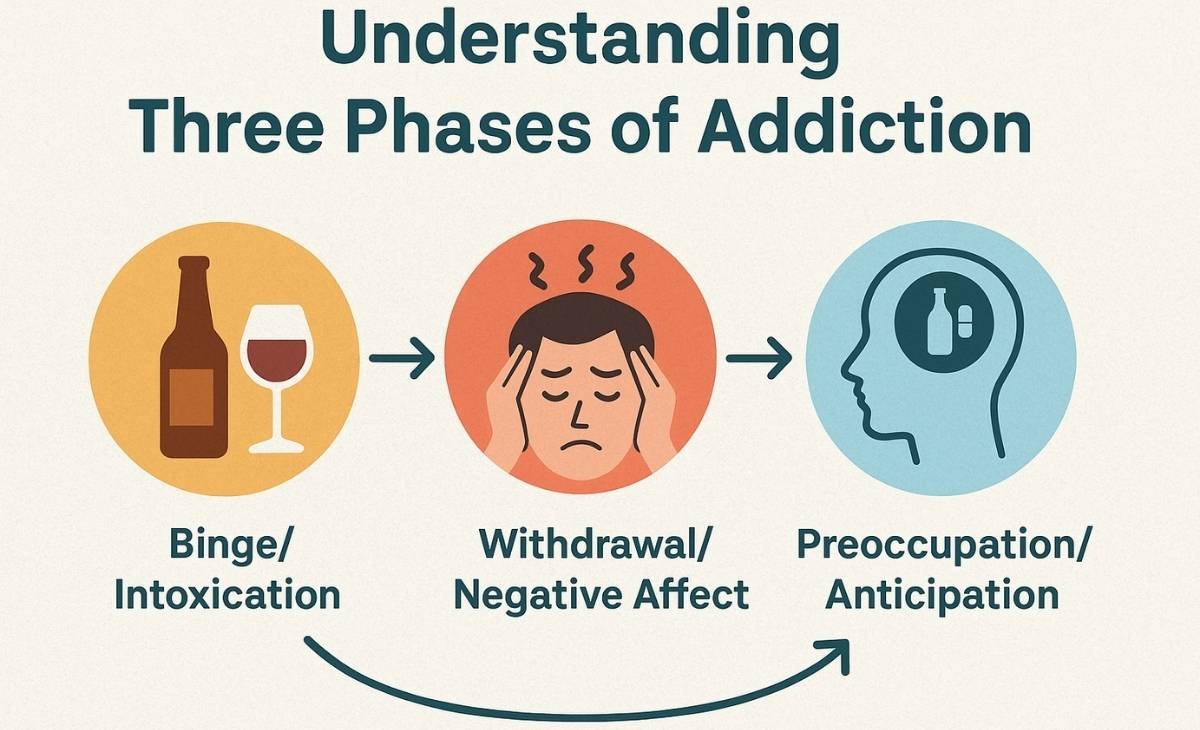
Addiction to substances such as tobacco, alcohol, stimulants, and opiates follows a predictable cycle. A study by experts Nora Volkow, George Koob, and Thomas McLellan outlines the phases that addiction takes hold: binge and intoxication, withdrawal and negative affect, and preoccupation and craving. Each stage corresponds to changes in brain systems, reinforcing addictive behaviors.
Table of Contents
The Binge and Intoxication Stage
Addictive substances trigger the brain’s reward system by releasing dopamine, creating pleasure. Over time, the brain adapts, requiring higher doses to achieve the same effect. This leads to frequent, compulsive substance use as tolerance builds.
Withdrawal and Negative Affect
As the brain becomes reliant on the substance, its absence results in feelings of anxiety, irritability, and discomfort. Instead of seeking pleasure, the substance is used to avoid these negative feelings, marking this phase of addiction.
Preoccupation and Craving
At this stage, the brain’s motivational and decision-making systems are rewired, making it difficult to resist the urge to use substances. Compulsive behaviors, impaired thinking, and an overwhelming desire for the substance take control, further entrenching the addiction cycle.
Addiction’s Impact on Brain Systems
Addictive substances hijack key brain systems responsible for motivation, emotional regulation, and cognitive control. This interference disrupts productive behaviors and healthy decision-making, leading to long-term consequences.
Preventing and Managing Addiction
Not everyone exposed to addictive substances becomes addicted, but early exposure during adolescence increases vulnerability. Preventative measures, along with structured recovery programs like Alcoholics Anonymous (AA), can help manage addiction. However, the risk of relapse remains a constant challenge for individuals in recovery.
Hope for the Future
Ongoing research into addiction’s effects on the brain offers hope. Understanding neural pathways can guide the development of new therapies that restore balance to brain systems affected by addiction.
By recognizing the phases of addiction, individuals and society can work toward prevention, support, and recovery strategies to combat substance dependence effectively.

Dr. Sadaqat ali
Dr. Sadaqat Ali is a renowned Pakistani addiction psychiatrist and the visionary founder of Willing Ways, Pakistan's leading addiction treatment and rehabilitation center. With over 50 years of experience, Dr. Ali has dedicated his career to pioneering non-confrontational intervention strategies and promoting mental health awareness. He is also a prolific writer and public speaker, known for his insightful articles and television appearances that aim to educate families and individuals on addiction recovery and behavioral health.